




Businesses across Massachusetts are increasingly exploring solar energy as a practical way to manage electricity expenses, improve energy efficiency, and support long-term sustainability goals. However, successful solar adoption requires more than simply installing panels on a commercial property. Careful planning, site evaluation, system design, financing, and professional installation all play an important role.
If you are considering Commercial solar panel installation in Massachusetts, understanding the process can help you make better decisions and get greater value from your investment. Clean Solar Energy helps businesses explore solar solutions designed around their energy requirements, property characteristics, and long-term objectives.
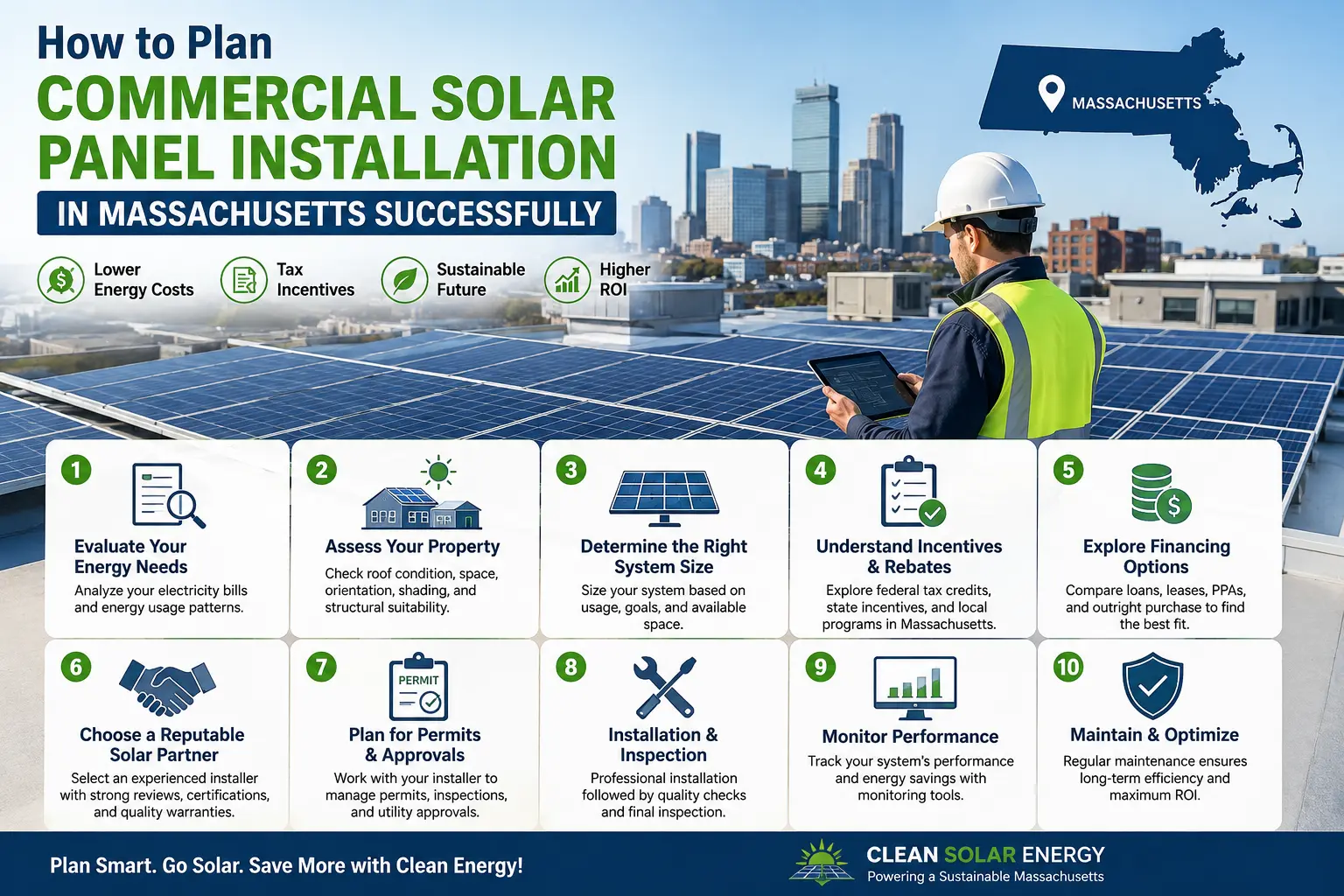
1. Evaluate Your Business Energy Consumption
The first step in planning a commercial solar project is understanding how much electricity your business uses. Review your recent utility bills and identify patterns in monthly and seasonal consumption.
Pay attention to:
- Average monthly electricity usage
- Peak electricity demand
- Current utility rates
- Seasonal changes in energy consumption
- Existing energy-efficiency measures
- Available roof or ground space
This information gives your solar provider a starting point for estimating the appropriate system size. A properly sized system can help your business make better use of available solar generation without unnecessarily investing in excess capacity.
2. Assess Your Commercial Property
Not every commercial property has the same solar potential. Before installation, the property should be evaluated to determine whether the roof, parking area, or available land is suitable for a solar system.
A professional site assessment typically considers roof condition, orientation, available space, shading, structural characteristics, and access for installation and maintenance.
For rooftop systems, it is particularly important to determine whether the roof has sufficient remaining lifespan. If major roof replacement is needed soon, addressing that work before installing solar may help avoid additional costs later.
3. Determine the Right Solar System Size
System sizing is one of the most important stages of Commercial solar panel installation in Massachusetts. The ideal system depends on several factors, including electricity consumption, available installation area, solar resource, project objectives, and budget.
A qualified solar professional can analyze your energy usage and property conditions to develop a suitable system design.
Instead of choosing the largest possible system, businesses should consider their actual energy requirements and financial goals. A customized design can help balance installation costs with expected energy production and long-term savings.
4. Understand Massachusetts Solar Incentives
Solar projects can involve significant upfront investment, so businesses should investigate available incentives and financial programs before finalizing a project.
Massachusetts businesses may have access to different state and federal programs depending on eligibility, project structure, and current regulations. Incentives can change over time, so it is important to verify the latest requirements before making financial decisions.
A knowledgeable solar provider can help explain which programs may apply to your commercial project and what documentation may be required.
5. Compare Financing Options
Businesses do not necessarily have to rely on one method of paying for a solar installation. Depending on the project, financing options may include purchasing the system outright, commercial loans, leases, or other solar financing arrangements.
When comparing options, look beyond the initial payment. Consider factors such as:
- Total project cost
- Expected energy savings
- Financing charges
- Ownership structure
- Maintenance responsibilities
- Expected project lifespan
- Long-term return on investment
A clear financial comparison can help business owners select an approach that fits their cash flow and investment strategy.
6. Choose an Experienced Solar Partner
Selecting the right installation company is another critical part of planning Commercial solar panel installation in Massachusetts.
Before choosing a provider, businesses should evaluate its experience, project approach, technical capabilities, warranties, communication process, and customer support.
Ask potential providers about their experience with commercial properties and whether they handle the necessary design, permitting, utility coordination, and installation processes.
Clean Solar Energy focuses on helping businesses understand their solar options and develop solutions that align with their energy and financial goals.
7. Plan for Permits and Utility Requirements
Commercial solar installations involve more than placing panels on a roof. Projects may require local approvals, electrical reviews, permits, inspections, and coordination with the appropriate utility.
The exact requirements can vary depending on the property, municipality, system size, and project configuration.
Working with an experienced solar provider can make this process easier because the project team can help coordinate important documentation and approvals.
8. Consider Long-Term Maintenance
Solar panels generally require relatively limited maintenance, but commercial systems should still be monitored regularly. Performance monitoring can help identify potential issues and determine whether the system is generating electricity as expected.
Businesses should understand the warranties associated with panels, inverters, mounting equipment, and workmanship. It is also useful to ask about maintenance and service support before signing an installation agreement.
9. Measure Your Solar Investment
After installation, businesses should track system performance and compare actual energy generation with initial projections. Monitoring electricity production can help identify performance issues and provide useful information for future energy planning.
Businesses can also evaluate changes in electricity expenses and overall project performance over time. This helps determine whether the solar investment is delivering the expected financial and operational benefits.
Make Your Commercial Solar Plan More Effective
Successful Commercial solar panel installation in Massachusetts starts with informed planning. From evaluating energy consumption and property conditions to reviewing incentives, financing, system design, permitting, and maintenance, every stage can influence the long-term success of a commercial solar project.
Rather than treating solar as simply an equipment purchase, businesses should view it as a long-term energy strategy. A carefully designed system can help organizations manage energy costs, improve sustainability efforts, and make better use of their commercial property.
With guidance from Clean Solar Energy, Massachusetts businesses can take a structured approach to exploring commercial solar and move forward with greater confidence. Start by assessing your energy needs, reviewing your property, and discussing your goals with an experienced solar professional.
