





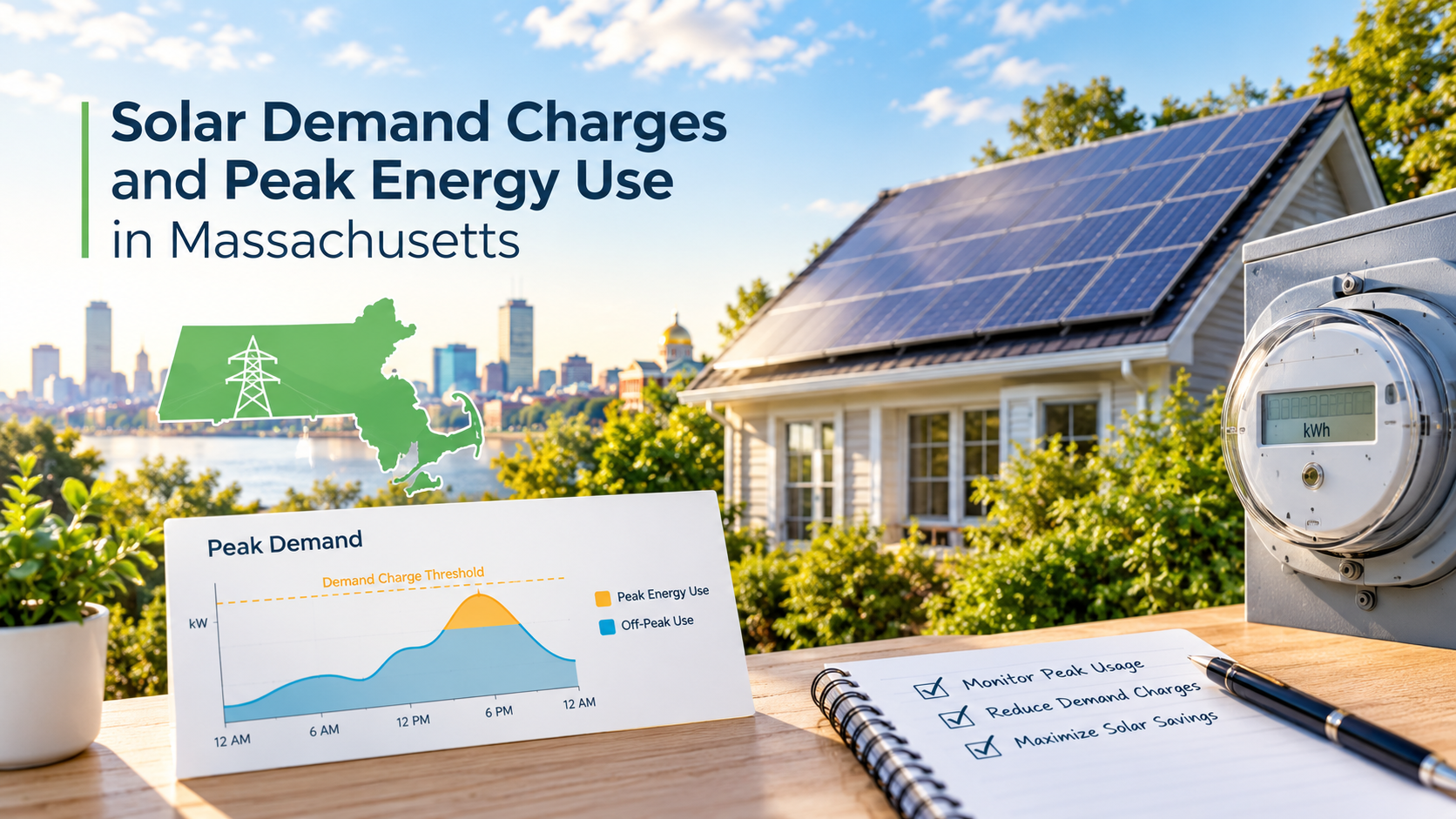
If your Massachusetts business has ever opened an electric bill and wondered why the total didn’t match how much energy you actually used, demand charges are probably the reason. For many commercial and industrial customers, these charges make up a large share of the bill, and they’re the part of the bill many owners understand least.
The good news is that a well-designed commercial solar panel installation can help bring them down, especially when it’s planned around your peak energy use rather than just your total usage. This guide explains how demand charges work, why they hit Massachusetts businesses hard, and how solar (with the right design) can reduce them.
What Are Demand Charges?
Your commercial electric bill generally has two main components:
- Energy charges ($/kWh): the total amount of electricity you consume over the month.
- Demand charges ($/kW): a fee based on the highest rate at which you drew power during the billing period, usually measured over a 15-minute interval.
Think of it like a highway. Energy charges pay for the total miles driven. Demand charges pay for the size of the road the utility had to build to handle your busiest moment.
A simple example: Say your building normally draws 80 kW, but for 15 minutes one afternoon, a chiller, an air compressor, and your lighting all start at once and push demand to 200 kW. You may be billed for 200 kW of demand for the entire month, even though that spike lasted a quarter of an hour.
Why Peak Energy Use Matters for Massachusetts Businesses
Massachusetts has some of the higher commercial electricity rates in the country, and utilities such as Eversource, National Grid, and Unitil structure their commercial rates with demand-based components. Several things make peak use especially important here:
- Seasonal swings: Summer cooling loads can create sharp afternoon peaks, while winter brings heating loads and shorter days.
- Equipment startup: Motors, HVAC systems, refrigeration, and manufacturing equipment can create short, costly spikes.
- Rate structures that differ by utility and class: Your exact demand charge depends on your utility, rate class, and meter type, so reviewing your own bill is essential.
If you run a manufacturing facility, warehouse, school, hospital, grocery store, or multi-tenant commercial building, controlling peak demand can be one of the most valuable ways to cut operating costs.
How Commercial Solar Panel Installation Helps Reduce Demand Charges
Solar helps in two ways.
1. It reduces the power you pull from the grid during daylight hours.
Commercial buildings typically use the most electricity during the business day, which lines up well with solar production. Every kW your array produces is a kW you don’t have to buy from the grid at that moment, which can lower your measured peak.
2. It lowers your energy charges.
Even where solar doesn’t reduce your peak, it offsets kWh purchases, which cuts the energy portion of your bill and can deliver strong long-term savings.
An Honest Caveat: Solar Alone Doesn’t Guarantee Lower Demand Charges
Demand charges are set by your single highest 15-minute interval in the billing period. If that peak happens on a cloudy afternoon, early in the morning, or in the evening, solar output may be low or zero at that moment, and your demand charge may not drop much.
That’s why smart system design matters. Businesses that want to meaningfully reduce demand charges often combine solar with:
- Battery energy storage: Batteries discharge during your highest-demand moments to “shave” the peak, which is where storage can pay off.
- Load management: Staggering equipment startups, using controls to avoid simultaneous peaks, and scheduling heavy loads away from your busiest periods.
- Interval data analysis: Looking at 15-minute usage data to see exactly when and why your peaks occur before sizing a system.
What to Know Before Going Solar in Massachusetts
A few factors shape the economics of any commercial project in the state:
- Your load profile: When and how you use power matters as much as how much you use.
- Available incentives: Massachusetts has offered state programs such as SMART (Solar Massachusetts Renewable Target), along with federal tax incentives and utility programs. Incentive rules and deadlines change, so confirm current details before making decisions.
- Net metering and interconnection: Rules vary by utility and project size and affect how excess production is credited.
- Roof or site conditions: Roof age, structural capacity, snow load, shading, and available land for ground-mount or canopy systems all affect design.
- Ownership options: Businesses can purchase systems outright, finance them, or use third-party arrangements such as power purchase agreements, depending on their goals.
Steps to Plan a Solar Project Around Peak Demand
- Gather 12 months of utility bills, plus interval data if available.
- Identify your peak demand events and what causes them.
- Evaluate site suitability for rooftop, ground-mount, or carport solar.
- Model solar alone versus solar plus storage to compare savings and payback.
- Review incentives and financing options that apply to your project.
- Choose an experienced installer who handles design, permitting, interconnection, and installation.
Why Work With a Local Commercial Solar Installer?
Massachusetts projects involve utility interconnection, local permitting, snow and wind loading, and ever-changing incentive programs. A local team that understands these details can design a system around your actual energy profile instead of a generic template.
At Clean Solar Energy, we help businesses across the state evaluate their energy use, design systems that address both usage and peak demand, and manage the process from planning through installation. Learn more about our commercial solar panel installer services in Massachusetts.
