





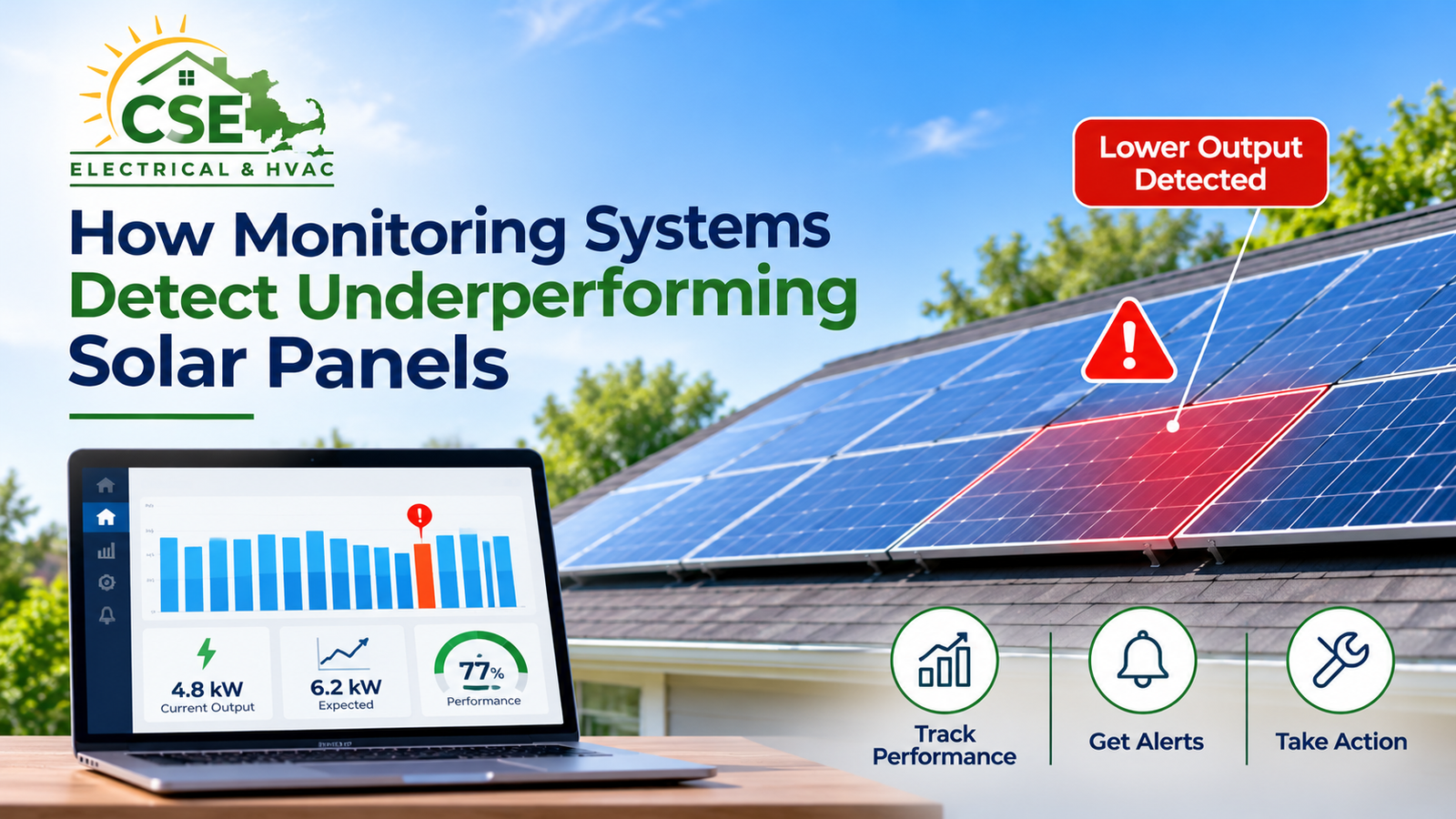
Your solar panels sit on the roof and quietly produce electricity, and most of the time that is all you need to know. But a loose connection, a failing inverter, or a patch of new shade can quietly cut your output for weeks. Without a monitoring system, you might only notice when your electricity bill creeps up.
Solar monitoring systems detect underperforming panels by comparing what your system actually produces against what it should produce under the same weather conditions. When the gap grows beyond normal variation, the system flags it. Below, we explain how that works, what the alerts mean, and what to do next.
What Is a Solar Monitoring System?
A solar monitoring system is the combination of hardware and software that tracks how much electricity your panels generate. It typically includes:
- Inverter data: Your inverter converts the DC electricity from your panels into AC electricity for your home. It also records voltage, current, power output, and fault events.
- Optimizers or microinverters (on some systems): These devices sit at the panel level and report on individual panels.
- A communication link: Wi-Fi, Ethernet, or cellular connections send data to a cloud platform.
- A dashboard or app: You see daily production, historical graphs, and alerts on your phone or computer.
If you are new to your system, our guide to what happens in the first 30 days after solar panel installation explains how to set up your monitoring account and read the basic numbers.
How Monitoring Systems Detect Underperformance
No single measurement tells the whole story. Monitoring platforms use several methods together.
1. Comparing actual output to expected output
The most important method is comparing real production with a performance estimate. The estimate is based on your system size, panel orientation, and the weather, especially sunlight intensity and temperature. If your system produces significantly less than the estimate on a clear day, something is wrong.
Some platforms also track a performance ratio, which measures how much of the theoretical energy your system actually delivers. A healthy system usually holds a steady ratio over time. A falling ratio is an early warning sign.
2. Comparing panels, strings, and inverters against each other
Panels in the same array usually receive similar sunlight. If one panel or one string of panels produces much less than its neighbors, the monitoring system can point to a localized problem such as shading, damage, or a poor connection.
This is why panel-level monitoring is so valuable. With only system-level data, one weak panel can hide inside a normal-looking total. With panel-level data, you see exactly where the shortfall is.
3. Reading inverter alerts and fault codes
Inverters constantly check their own condition and the grid. They report events such as:
- Ground faults or insulation problems
- Voltage or frequency outside the allowed range
- Overheating
- Communication failures between components
These codes help technicians diagnose the issue before they climb onto your roof.
4. Tracking trends over time
Monitoring platforms store months and years of history. That lets them detect slow changes that daily readings miss, such as gradual soiling, early component wear, or a steady drop in output compared with the same season last year. Panels naturally lose a small amount of efficiency each year, so the platform looks for declines that are faster than normal aging.
5. Normalizing for weather
A cloudy day is not a fault. Better platforms adjust for local weather data so they don’t send false alarms every time a storm rolls in. This matters in New England, where conditions change quickly. Our post on how Massachusetts weather patterns influence solar energy design covers why local conditions shape both system design and expected performance.
Common Problems Monitoring Systems Catch
| Problem | What you may see in the data |
|---|---|
| Shading from new tree growth or nearby construction | Output drops at the same time each day, often on specific panels |
| Dirt, debris, or soiling | Gradual decline, partly recovering after rain |
| Snow coverage | Zero or very low output after a snowfall |
| Inverter failure or fault | Sudden drop to zero or repeated error codes |
| Loose or corroded wiring | One string performing below the others |
| Damaged or cracked panels | A single panel producing less than its neighbors |
| Communication loss | Data stops appearing even though the panels may still be working |
Some of these issues are seasonal rather than faults. Snow and short days, for example, affect every system. Read more in our guide to solar panel output during a Massachusetts winter. If you suspect shade is the culprit, see our article on solar solutions for properties with partial roof shading.
Is It a Real Problem or Normal Variation?
Before you worry, run through these quick checks:
- Compare similar days. Look at days with similar weather rather than judging one reading.
- Check the season. Lower winter output is normal.
- Look for alerts. Check your app for unresolved warnings.
- Confirm the data is current. A stalled dashboard can mean a Wi-Fi issue, not a production issue.
- Watch the pattern. A single low day is rarely a fault. Several clear days of low output deserve attention.
For safety, never open electrical enclosures or climb onto the roof to inspect panels yourself. A qualified solar technician should handle diagnosis and repair.
What Happens After the System Flags a Problem?
When monitoring detects underperformance, a typical process looks like this:
- Review the data to identify which panel, string, or inverter is affected.
- Rule out simple causes such as snow, temporary shade, or a communication drop.
- Remote diagnosis, where the installer checks logs and fault codes.
- On-site inspection if the issue is not resolved remotely. Technicians may check connections, test components, and, for larger systems, use thermal imaging to find hot spots.
- Repair or replacement, often covered by the equipment or workmanship warranty.
Acting quickly matters. A fault left unnoticed for months means months of lost production. Our solar maintenance and repair services are designed to help homeowners and businesses address these issues early.
Monitoring for Commercial Solar Systems
Larger commercial arrays have more to lose when something goes wrong. A single underperforming string can affect savings and, for businesses with high peak usage, even demand-charge planning. If you manage a commercial property, see how demand charges and peak energy use interact with solar production, and learn more about our commercial solar panel installation in Massachusetts.
How to Choose a System With Good Monitoring
If you are planning a new installation, ask your installer:
- Is monitoring at the system level or the panel level?
- Does the platform send automatic alerts to me and to the installer?
- Can I see historical production and compare seasons?
- Who responds when an alert appears, and how quickly?
- What does the warranty cover if a component fails?
Our 7 things to know before installing solar panels in Massachusetts includes more questions worth asking before you sign.
Final Thoughts
A monitoring system is your early-warning system. By comparing actual output with expected output, tracking panels against each other, and watching trends over time, it helps you catch problems while they are small and inexpensive to fix.
If your production looks lower than it should, or you want a system designed with strong monitoring from day one, contact Clean Solar Energy. Our team can review your system’s performance and recommend the right next step. You can also explore our residential solar panel installation in Massachusetts or browse our full range of services.
